

What Is the Difference Between Storm Damage and Normal Wear on a Roof?
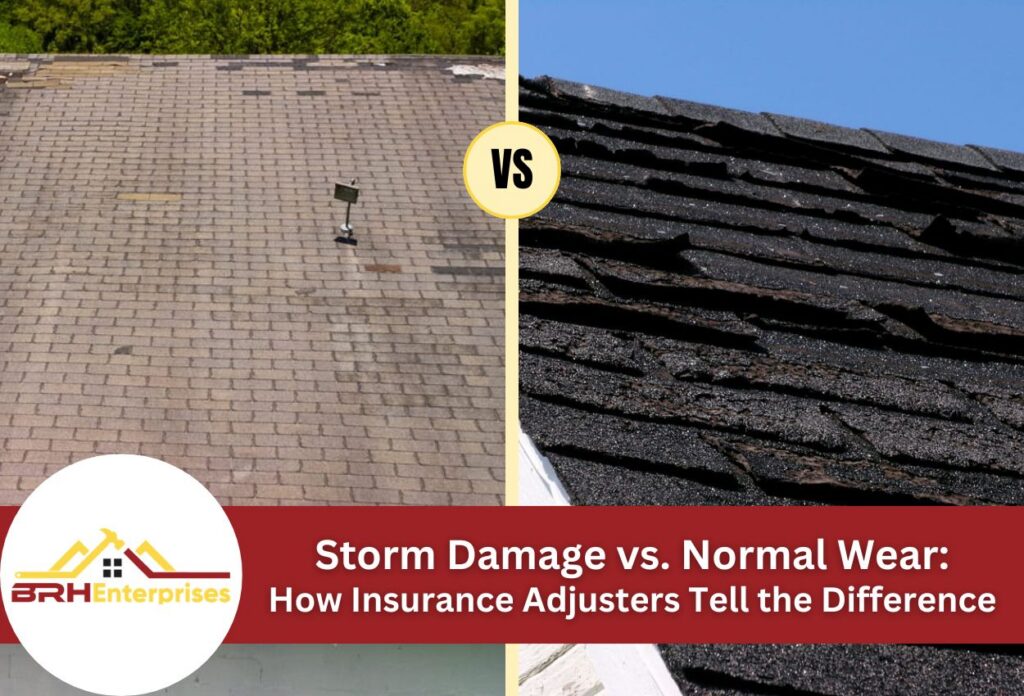
Storm damage is sudden, linked to a specific storm, and localized, while normal wear is progressive, uniform, and spreads across the entire roof over time. Asphalt shingle roofs in high-humidity climates typically show measurable granule loss and sealant degradation starting around years 7 to 10 of a 20 to 30-year rated lifespan. That overlap makes the distinction harder than most homeowners expect.
The stakes are real. Homeowners insurance covers sudden, accidental storm damage but excludes aging, weathering, and lack of maintenance. That means the burden of proof falls on the homeowner to show the damage is storm-related and not something that was already happening before the storm arrived. An insurance claim denied as pre-existing wear can leave a homeowner responsible for a full roof replacement out of pocket.
How Do Insurance Adjusters Determine Storm Damage vs. Aging During a Roof Inspection?
Adjusters evaluate three primary factors: whether damage links to a verified storm date, whether the damage pattern is random or directional, and whether physical evidence, such as hail bruising, fractured shingles, lifted tabs, or dents on soft metals, matches a specific storm rather than slow deterioration. Hail measuring 1 inch or larger in diameter is the threshold most commonly associated with functional shingle damage in standard adjuster guidelines. Adjusters typically cross-reference their inspection findings with third-party weather verification services to confirm a storm actually occurred on the date a claim referenced.
| Dimension | Storm Damage Indicators | Normal Wear Indicators |
|---|---|---|
| Pattern | Random or directional damage; concentrated impacts, not evenly spaced | Uniform damage across the entire roof, progressive over years |
| Location on roof | Matches storm approach direction | Roof-wide aging, worse on south-facing slopes due to UV exposure |
| Appearance on soft metals | Fresh circular or irregular dents on gutters, flashing, and HVAC fins | Oxidation, rust, and gradual corrosion with no impact marks |
| Presence on multiple slopes | Damage concentrated on exposed slopes; protected slopes largely unaffected | Deterioration present on all slopes at roughly equal rates |
When soft metals like gutters and flashing show fresh dents that match shingle damage on the same slope, that combination strongly supports a storm-related claim.
What Are the Visual Signs of Storm Damage vs. an Aging Roof on Asphalt Shingles?
Storm damage and damage from aging produce different visual patterns on asphalt shingles, and knowing those differences can determine whether a claim gets approved or denied. Six specific indicators separate the two, and each one has measurable characteristics adjusters look for during an inspection.
| Indicator | Storm Damage | Normal Aging |
|---|---|---|
| Granule Loss | Concentrated at impact points; circular bare spots 1 to 2 inches in diameter | Thinning across shingles all over the roof |
| Cracking Pattern | Fractures from a single impact point; sharp-edged breaks | Surface cracking spread evenly across shingles from thermal cycling |
| Surface Marks | Soft, felt-like depressions 1 to 2 inches in diameter with displaced granules around the edges | General oxidation, chalking, and surface fading with no depression or impact center |
| Shingle Lifting | Tabs lifted or torn from a single instance of strong winds; broken sealant strips along a directional pattern | Gradual sealant drying and minor curling across all slopes |
| Flashing Condition | Fresh dents, creases, or displacement on step flashing and counter flashing | Slow corrosion, rust staining, and dried sealant with no deformation marks |
| Gutter Evidence | Heavy granule deposits concentrated in gutters directly below impact zones | Light, even granule accumulation across all gutters consistent with roof age |
South-facing slopes receive more direct UV exposure, which can cause granule thinning and surface oxidation that looks similar to hail bruising in early stages. That is why adjusters also check north-facing slopes and soft metals. If hail hit the roof, those surfaces show matching impact marks regardless of sun exposure. Finding hail bruising on both north and south-facing slopes, combined with fresh dents on gutters or flashing, is the strongest visual confirmation that damage is storm-related rather than age-driven.
How Can You Prove Storm Damage for an Insurance Claim Before the Adjuster Arrives?
A pre-inspection report from a licensed roofing contractor, completed before the adjuster visits, is one of the strongest tools for proving storm damage for an insurance claim, and many roofing contractors offer free roof inspections. Gathering the right evidence fast matters too. Claims should be filed within 30 days of the storm, as quick reports generally face less scrutiny than delayed claims.
- Pull verified storm data within 24 to 48 hours. Use a third-party weather verification service to confirm the storm date and hail size. This official record links your claim to a specific storm.
- Photograph all damage within 72 hours. Take close-up and wide-angle photos of every affected area. Include a coin or ruler in hail impact shots to show scale.
- Document soft-metal damage on gutters, downspouts, AC fins, and window screens. Fresh circular dents on these surfaces act as supporting evidence that matches shingle damage to the same storm.
- Photograph granule buildup in gutters and downspouts. A heavy deposit concentrated in one area after a storm supports impact damage rather than gradual wear from an aging roof.
- Locate prior inspection reports or roofing invoices. Any document showing the roof’s pre-storm condition helps establish a baseline and counters a pre-existing damage argument from the carrier.
- Avoid permanent repairs before the adjuster visits. Temporary fixes to stop leaks are fine, but permanent repairs made before the inspection can eliminate physical evidence the adjuster needs to approve the claim.
The single most effective move is scheduling a licensed contractor inspection before the insurance adjuster arrives. That documented report gives you an independent, professional baseline that is far harder to dismiss than photos alone. A professional roof inspection provides the documented findings that support a claim from the very first step.
What Do Insurance Adjusters Look for During a Roof Inspection That Homeowners Often Miss?
Adjusters are trained to find six specific indicators that most homeowners walk right past, and missing even one can give a carrier grounds to shift damage from storm-related to pre-existing wear.
- Hail bruising versus blistering: To identify genuine hail bruising, adjusters physically press the shingles to locate soft indents. Blisters feel hollow and are caused by trapped moisture or manufacturing defects. Hail bruising shows directional granule displacement around the impact center; blistering does not.
- Directional creasing on shingle tabs: Parallel crease lines running across tab edges indicate wind speeds above 50 to 60 mph during the storm. Homeowners rarely notice these subtle folds, but adjusters treat them as measurable evidence of strong winds.
- Fractured mat under intact granules: A shingle can look undamaged from 10 feet away but have a cracked fiberglass mat underneath. Adjusters inspect at close range because granules often stay in place even after the shingle’s fiberglass mat has fractured from impact.
- Ridge cap damage: Ridge caps sit at the highest, most exposed point of the roof and take disproportionate impact from hail and wind. Homeowners rarely check there, but adjusters prioritize ridge caps as an early confirmation point for storm damage.
- Collateral damage on skylights, vent boots, and chimney flashing: Fresh cracks, dents, or displaced sealant on these surfaces serve as supporting evidence that ties shingle damage to a specific storm.
- Prior repair patches: Visible patches or mismatched shingles signal previous repairs that an adjuster may use to argue pre-existing conditions. Locating these before the inspection allows a homeowner to document when repairs were made and why.
On larger claims, adjusters often use drone imagery and software that maps impact density. Homeowners can request that impact map as part of the claim file under most state disclosure rules. Asking for it puts both parties on equal footing during any coverage dispute.
What Does It Cost If Your Storm Damage Claim Is Denied or Underpaid?
A denied or underpaid storm damage claim can cost a homeowner anywhere from $1,500 to the full $8,000 to $16,000 replacement cost, depending on how the claim is handled and how long repairs are delayed.
| Claim Outcome | Typical Homeowner Out-of-Pocket Cost | Key Detail |
|---|---|---|
| Full claim approved | $1,000 to $2,500 (deductible only) | Carrier pays replacement cost minus deductible |
| Partial claim approved | $1,500 to $4,000 gap payment | Actual cash value payout falls short of full replacement cost on mid-range roofs |
| Claim denied; homeowner pays in full | $8,000 to $16,000 | Full asphalt shingle roof replacement cost; varies by size and pitch |
| Claim disputed with public adjuster | 10% to 15% of final settlement (adjuster fee) | Disputed claims can sometimes settle 20% to 40% higher on average than initial adjuster offers |
Delaying repairs after a claim is denied increases the financial hit fast. A storm-damaged roof left unrepaired for 2 to 3 years commonly leads to interior water damage averaging $3,000 to $8,000 in repair costs, on top of whatever the roof replacement ultimately costs. Hail-impacted asphalt shingles also lose an estimated 5 to 10 years of functional life if left unrepaired, turning a 25-year roof into an effective 15 to 20-year system. Acting fast after a claim denial, whether by disputing the claim or scheduling a roof repair, almost always costs less than waiting.
Ready to Have Your Roof Evaluated Before the Insurance Adjuster Arrives?
Getting a documented contractor inspection before the adjuster visits creates an independent baseline that is far harder to dismiss than photos alone. BRH Enterprises LLC works with homeowners on storm damage inspections and provides documented reports that support the claim process from the start.
Having a licensed, insured roofing contractor on your side before the adjuster arrives can be the difference between a full approval and an $8,000 to $16,000 out-of-pocket replacement. Do not wait until the adjuster schedules; schedule your inspection with a reputable contractor first.
Not ready to schedule? Learn more about storm damage roof repair.
Frequently Asked Questions
Got questions about your roof? We’ve got answers. From maintenance tips to insurance claims and repair timelines, our FAQ section covers the most common concerns homeowners have. Get informed and make confident decisions about protecting your home.
People Also Ask
Can a roof that was recently installed still show damage that gets classified as normal wear by an adjuster?
Yes, adjusters can classify premature deterioration of a recently installed roof as a manufacturing defect or workmanship failure rather than storm damage. Keeping your installation records and manufacturer warranty documentation helps separate installation-related issues from legitimate storm claims.
Does the age of my roof automatically disqualify me from getting a storm damage claim approved?
Roof age alone does not disqualify a claim, but depending on your specific policy terms, carriers may apply actual cash value depreciation rather than replacement cost if the roof is past its rated midpoint. A roof showing documented pre-storm condition through maintenance records and prior inspections has a stronger basis for full replacement cost coverage.
Can freeze-thaw cycles in winter create damage that looks like storm damage to an adjuster?
Freeze-thaw cycling can crack sealant strips, lift shingle edges, and cause granule displacement that resembles wind or impact damage on visual inspection alone. Adjusters in seasonal climates cross-reference damage patterns with both winter weather records and spring hail or wind storms to separate the two causes.
Will my claim be affected if my neighbor's roof got approved for the same storm but mine was denied?
Neighboring approvals are relevant context but do not bind your carrier, since roof age, condition, and installation differences affect how the same storm impacts each roof. Documenting your neighbor’s approval alongside matching storm verification data can, however, strengthen a dispute or appeal with your carrier.
Do adjusters treat damage to a roof that has already been partially replaced differently than a full original roof?
Yes, since a roof with mismatched sections from prior partial replacements creates baseline ambiguity. Adjusters may scrutinize the areas that were replaced before the storm. Maintaining records of any partial replacement work, including dates and materials used, helps establish a clear pre-storm condition for each section.
Can high humidity levels in this region accelerate shingle aging in ways that complicate a storm damage claim?
Prolonged high humidity promotes algae growth, granule adhesion breakdown, and sealant softening that can advance shingle deterioration well ahead of the rated lifespan, creating conditions that overlap visually with storm impact evidence. Adjusters in humid climates are specifically trained to account for accelerated weathering when evaluating granule loss and surface cracking patterns.
Is damage to gutters and downspouts covered under the same claim as roof storm damage, or does it require a separate process?
Gutter and downspout damage caused by the same storm is typically covered under the same homeowners insurance claim as the roof, since both are considered exterior structures subject to the same peril. Documenting gutter and downspout damage simultaneously during your initial photo documentation strengthens the overall claim rather than requiring a separate filing.
How does an adjuster handle a storm damage claim when there are no prior inspection records to establish the roof's pre-storm condition?
Without prior records, adjusters rely more heavily on observable physical evidence, the roof’s estimated age relative to its rated lifespan, and permit history available through local building departments. Homeowners in this situation benefit most from a licensed contractor inspection completed immediately after the storm, before any evidence degrades.
Can storm damage to soffits, fascia boards, or attic ventilation support a roof damage claim even if shingle damage appears minimal?
Damage to soffits, fascia boards, ridge vents, and attic ventilation from the same storm serves as supporting structural evidence that wind or impact forces reached the roofline. Adjusters consider collateral damage to these connected components when evaluating whether shingle-level damage meets the threshold for a covered loss.
If a storm occurred but hail size was below the 1-inch threshold, can a wind-only roof damage claim still be valid?
Wind-only claims remain fully valid and are evaluated separately from hail damage, with adjusters looking for directional shingle lifting, creasing, broken sealant strips, and missing tabs consistent with documented wind speeds. Third-party weather verification software and local weather station data can confirm wind speeds that support a wind-damage claim even when hail size falls below standard functional-damage thresholds.
Related Articles
-
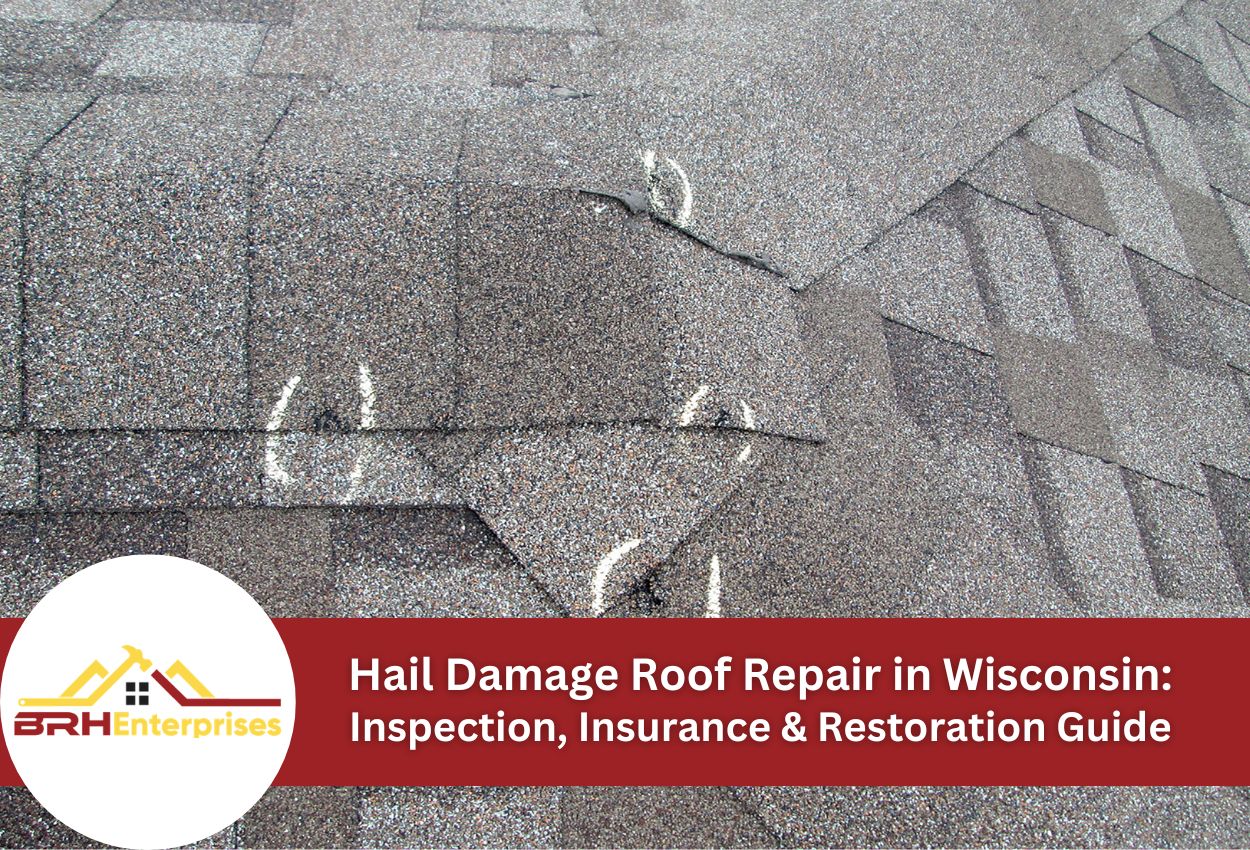 July 16, 2026What Should Wisconsin Homeowners Do After a Hailstorm Damages Their Roof?Did hail damage your roof? Learn how Wisconsin homeowners inspect damage, handle claims, and find trusted contractors for repairs.
 -
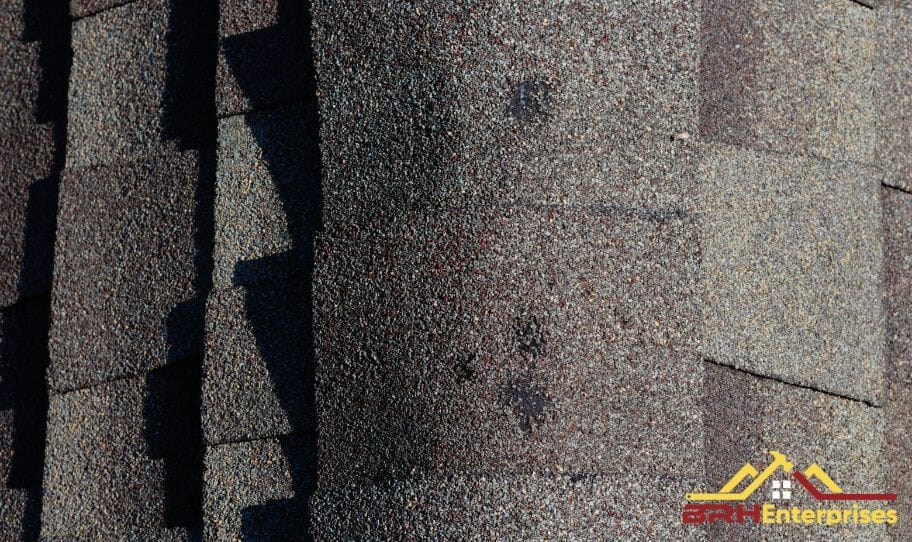 October 4, 2022What Causes Shingle Granule Loss & How To Fix ItDo you see lots of shingle granules lying around your home lately? These are tiny, sand-like grains that fall from … <p class="link-more"><a href="https://bestroofhelp.com/blogs/shingle-granule-loss/" class="more-link">Continue reading<span class="screen-reader-text"> "What Causes Shingle Granule Loss & How To Fix It"</span></a></p>
 -
 January 29, 2025Your Complete Guide to Roof SealantsThe main function of your roof is to protect your home from weather-related damage. However, over time, the elements can … <p class="link-more"><a href="https://bestroofhelp.com/blogs/roof-sealants/" class="more-link">Continue reading<span class="screen-reader-text"> "Your Complete Guide to Roof Sealants"</span></a></p>
Protect Your Home with Expert Roofing
Don’t wait for leaks or storm damage to cause costly repairs. Our experienced roofing team provides fast, reliable service, high-quality materials, and lasting results. Ensure your home stays safe, secure, and looking great—contact us today for a free estimate.